

Beginning July 1, 2025, Georgia drivers gained a new level of convenience: the ability to use a digital driver’s license at traffic stops and in other official situations. Thanks to House Bill 296, the state now formally recognizes electronic versions of driver’s licenses — but there are important limits and conditions that every Georgia driver needs to understand
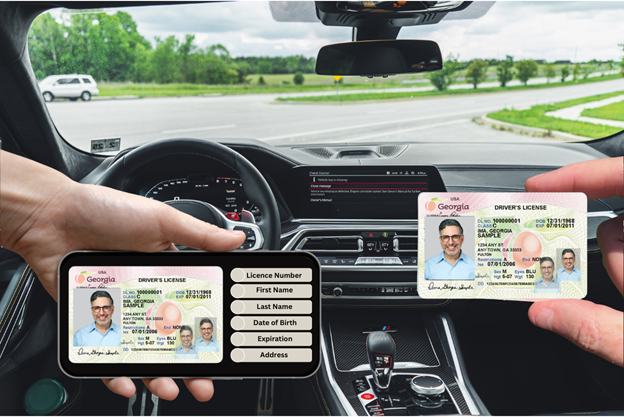
This change is part of a broader modernization effort happening across the country, with states like Arizona, Colorado, and Maryland rolling out similar programs. But here in Georgia, the law is unique in how it balances technology, safety, and accessibility.
So, what does this mean for you the next time you’re pulled over, checked at the airport, or asked to show ID? Let’s break it down.
What HB 296 Does
House Bill 296 makes it legal for Georgia drivers to present a digital version of their driver’s license to law enforcement officers or other officials.
But there’s a catch:
- Officers must have the appropriate digital reader to verify the license.
- If the officer doesn’t have the reader, you’ll still need to present your physical license.
- Until 2027, when all Georgia law enforcement agencies are expected to be equipped with digital readers, drivers should plan to carry both versions.
According to 13WMAZ News
Charles Scholle explains:
“This is a step forward in making everyday life more convenient for Georgia drivers. But for now, it’s not a replacement — it’s an option. Every driver should still carry their physical license to avoid problems if the officer doesn’t have the technology to scan your digital one.”
How Digital Driver’s Licenses Work
Digital licenses aren’t just photos of your plastic card saved on your phone. They’re encrypted digital IDs stored in secure apps like Apple Wallet or Google Wallet.
This makes them more secure than a screenshot — but also requires that both the driver and the officer have the right tech to use them.
Benefits of Digital Licenses:
- Convenience: No more fumbling through your wallet during a traffic stop.
- Security: Encrypted IDs are harder to fake or copy than plastic cards.
- Integration: Already usable at some TSA checkpoints in participating states.
Drawbacks (for now):
- Not universally accepted: Until 2027, not all agencies will have the scanners.
- Technology failures: Phones die, apps glitch, readers malfunction.
- Privacy concerns: Some drivers worry about government access to phones during stops.
Scholle Law recommends that all drivers treat digital licenses as a supplement, not a substitute — at least for the next few years.
What This Means for Most Drivers in Georgia
Here’s what the new law really means in practice:
- You Still Need Your Plastic License.
Digital IDs may be legal, but they’re not yet universal. Don’t rely on your phone alone — especially if you’re outside metro areas where technology adoption may lag. - You’ll Start to See More Officers Equipped With Digital Readers.
Larger counties and cities will likely adopt this tech faster than rural areas. Expect uneven rollouts. - Traveling Out of State? Keep Your Physical ID Handy.
Other states may not recognize Georgia’s digital IDs, so your plastic card is still the safest bet when traveling. - Technology Doesn’t Replace Responsibility.
Whether you present a digital or physical license, you’re still required to follow Georgia’s traffic laws. A digital ID won’t protect you from citations, suspensions, or DUI consequences.
Charles Scholle puts it simply:
“The law is changing, but the expectations for safe, responsible driving aren’t. Whether you show a license on your phone or hand over a plastic card, your duties as a driver remain exactly the same.”
What If There’s a Dispute During a Traffic Stop?
A common concern is: What happens if a driver presents a digital license, but the officer doesn’t have the right scanner?
Under HB 296, the driver is still required to provide a physical license if requested. Refusing to do so could result in citations or complications.
That’s why the safest approach is to carry both.
How Georgia Compares to Other States
Georgia is not the first state to roll out digital IDs, but it is among the earliest to codify them into law.
- Arizona and Maryland already allow digital IDs at TSA checkpoints.
- Colorado drivers can use them for age verification at certain businesses.
- Georgia’s twist: A phased rollout with a deadline for universal enforcement by 2027.
This positions Georgia as a leader in modernization, while still keeping safeguards in place during the transition.
Safety and Privacy Concerns
Some critics worry about the privacy implications of digital IDs. For example:
- Could officers demand access to other apps or phone data during a stop?
- What happens if a driver’s phone is dead or malfunctioning?
The state has made clear that only the ID data itself is shared during verification, not other phone contents (13WMAZ)
Scholle Law emphasizes:
“Technology is never perfect. Batteries die, apps crash, and systems fail. That’s why it’s essential to keep your physical license as a backup until this technology is fully tested and universally adopted.”
Why This Law Matters
At first glance, the digital ID law may feel like a small update. But it actually signals a major shift in how Georgia approaches driver safety, technology, and modernization.
For most drivers, it means:
- More convenience in everyday life.
- A glimpse into a future where wallets may be optional.
- The need to adapt to changing rules and enforcement methods.
And for Scholle Law clients, it’s another reminder that laws evolve constantly — and staying informed is the best way to protect your rights.
The Bottom Line for Georgia Drivers
- Digital IDs are legal, but physical licenses are still required (at least until 2027).
- Expect uneven adoption across the state as law enforcement agencies update their equipment.
- Always be prepared with a backup — your plastic card isn’t going away just yet.
Charles Scholle concludes:
“Georgia’s digital license law is exciting because it gives drivers new options. But at the end of the day, technology is only useful if it makes life safer and simpler. That’s what matters most — not the gadget, but the driver behind it.”
Need Help After a Traffic Stop or Accident?
At Scholle Law, we stay on top of new Georgia laws so you don’t have to. If you’ve been injured in an accident — whether caused by a reckless driver, a commercial truck, or a distracted motorist — we’re here to help.
Your story deserves to be heard. Your recovery deserves to be fought for.
📞 Call us today at (866) 592-1296
💬 Or visit schollelaw.com