

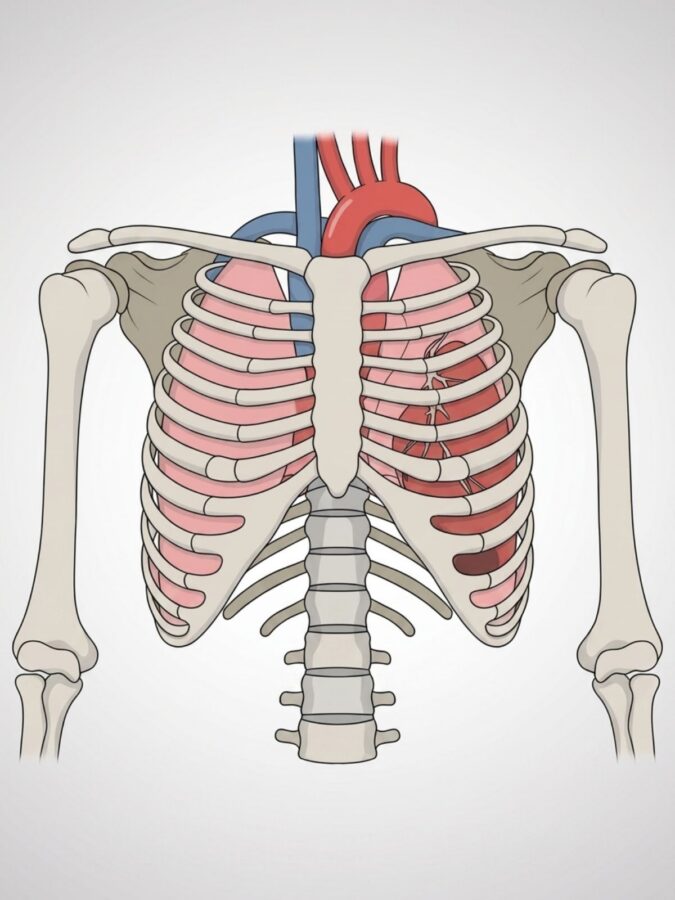
Chest injuries are fairly common following automobile accidents in Georgia. They also happen to be one of the most serious injuries that are not always obvious at the time of the collision.
Many car crash survivors become aware of this type of injury after their shock and adrenaline have subsided—sometimes days, weeks or even months later.
Experiencing Chest Pain After a Car Accident?
Learn the crucial steps to take if you suffer from chest pain after an accident. Protect your health and legal rights with professional guidance.
Contact Us
What Causes Chest Pain After a Car Accident?
During an accident, you can injure your chest by hitting it on the steering wheel, the doors or the dashboard. The seat belt and airbags can also cause chest injuries. A minor blow to the chest can knock the wind out of you. If you continue to have breathing problems, then it could be a sign that organs in your chest have been injured.
Hitting your chest on the steering wheel, dashboard, seat belt or airbag can cause:
- Damage to the sternum which can injure your heart, large blood vessels or esophagus. The sternum is your breastbone, which is the long, flat bone located in the center of the chest and connected to your ribs by cartilage.
- Damage to the trachea. The trachea is your windpipe, which is the tube that is made up of sturdy rings of cartilage through which air is transported to and from your lungs.
- A punctured lung. The force from a car accident can break a rib and cause it to tear the lung deeply enough that it seeps air into the chest cavity. Once a lung has been punctured, the result can be a collapsed lung.
- Injury to the kidneys, if the blow is to the back of the chest.
- Injury to the spleen, if the blow is to the lower or side chest. Your spleen is a fist-sized organ located in the upper left side of your abdomen.
- Fractured ribs. The rib cage protects your heart, lungs and other major blood vessels.
Injuries from airbags
During a crash, the airbag is inflated with a chemical propellant, causing the bag to deploy in less than 5 one-hundredths of a second. This inflation also tightens the seat belts. The airbag is a lifesaving safety device, but it can cause an injury due to this violent deployment.
The combustion that occurs when an airbag deploys can cause burns to a driver or passenger’s chest, neck, face and arms. The burn is similar to a chemical burn and very painful. The force of the airbag deployment can bruise the skin, and the noise can cause hearing loss.
The safety of airbags has increased over the years. When airbags were first used, there were several claims from individuals who suffered severe burns and scars to their face, chest and arms. Today, there are only rare cases of chest injuries from an airbag. In these cases, the injuries suffered typically include rib fractures, sternum fractures, bruising, rupture of the aorta, pneumonia and a heart attack.
Are Seatbelts and Airbags Safe?
Generally speaking, being restrained by a seatbelt is much safer than not wearing one at all.
However, the National Institutes of Health have published several papers documenting the few fatalities that were caused by airbags. These cases involved extensive rib fractures, severe bruising within the chest cavity, and cuts and punctures of the heart and its surrounding membranes.
In most of these cases, the occupant was significantly below average height and sat less than 10 inches from the steering wheel. This caused the airbag to generate the full force of the deployment to the occupant’s chest. Sometimes, the driver was slumped forward due to another injury, causing this same effect.
This is why children younger than 12 should ride in the back seat, and a rear-facing infant seat should never be placed where there is an active airbag.
Chest Injury Symptoms
Chest injuries may cause you to feel soreness beneath your ribs or pain when you breathe. Other symptoms of a chest wall injury are pain when you cough, take a deep breath and laugh. It can also be painful to move in bed and walk.
Symptoms of an injured sternum typically involve intense pain that gets worse when you breathe, cough or rotate your torso. You can also have bruising and swelling over the area of the fracture. A fractured sternum may cause crepitus (a crunching sound made when broken bone ends to rub together).
Symptoms of a damaged trachea are wheezing, stridor (a high-pitched, musical breathing sound), shortness of breath, difficulty breathing, rapid breathing, coughing and hoarseness. If the swelling to the trachea is extensive enough, it can start to block your airway.
Symptoms of lung damage are trouble breathing, shortness of breath, feeling like you are not getting enough air, decreased ability to exercise, coughing, pain or discomfort when breathing in and out.
Symptoms of an injury to the kidney are blood in the urine, right or left abdominal pain, muscle guarding, low back pain, and abdominal bruising, swelling and pain.
Symptoms of an injury to the spleen are pain in the upper left abdomen, tenderness to touch in the upper left abdomen, left shoulder pain, confusion, lightheadedness or dizziness.
Chest pain can limit the movement of your arms, shoulders and trunk. Chest pain can also cause difficulty sleeping and performing your normal daily activities. Chest pain can be exacerbated by coughing, sneezing and laughing. Minor chest injury pain can last days or weeks, while a moderate to severe chest injury can take weeks and months to heal.
When Should You Go to the ER?
If chest pain occurs after a car accident and you experience any of the following symptoms, seek emergency care immediately:
- Shortness of breath
- Chest pressure or tightness
- Pain radiating to your arm or jaw
- Dizziness or fainting
This may indicate a serious condition such as internal bleeding or heart injury.
This matters because waiting too long can lead to severe complications or even death.
What to Do if You Experience Chest Pain After a Car Accident
Chest pain should be treated seriously. If the injuries are not treated immediately, they could worsen significantly. Chest pain may be a symptom of broken ribs, a punctured lung or internal bleeding.
If you have chest pain after a car accident, you should seek medical attention immediately.
A doctor can examine you and order medical testing if they think it is needed. Diagnostic tests include X-rays and CT scans. A doctor can diagnose the extent of your injury and treat you properly.
When you see the doctor, be sure to tell them if you recall hitting anything inside of the vehicle at the time of the accident. This will help the doctor give a more accurate diagnosis and prescribe better treatment.
Treatment and Recovery for Chest Injuries
Treatment for a fractured sternum involves applying ice packs, taking anti-inflammatory drugs and limiting movement as well as avoiding heavy lifting. The typical recovery time for a fractured sternum is about 10-12 weeks, though this timeline will be longer if surgery is required. One potential complication of a chest pain after a car accident is a chest infection. If the fractured sternum is from trauma, it is possible to bruise the underlying lung tissue or heart.
Treatment for damage to the trachea varies significantly depending on the extent of the injury. The trachea can be damaged in an automobile accident as a result of minor bruising or being crushed. The recovery time depends on the extent of the injury. If the trachea is damaged to the extent that it prevents air from entering the lungs, this could be a fatal injury.
Treatment for a punctured lung varies depending on the severity of the trauma and the amount of damage to the lung. If it is a small puncture, you may only need oxygen and rest.
Treatment for injury to the kidneys as a result of a traumatic blow or collision is usually bed rest. A bruised kidney usually heals on its own, generally in up to 2 weeks. However, a complication of a bruised kidney can be internal bleeding.
Treatment for a ruptured spleen is surgery. Many people with a ruptured spleen experience serious internal bleeding that requires immediate surgery. The surgery may be to repair or remove the spleen. The risk of surgery to remove the spleen is serious infections, such as sepsis. Recovery usually takes anywhere from 3 to 12 weeks.
Similar to a fractured sternum, treatment for fractured ribs is also ice packs and limiting mobility. Unlike when you break your arm or leg, your ribs cannot be isolated for a cast or splint. Therefore, doctors are only able to concentrate on helping the patient with the intense pain from a fractured rib. Recovery for broken ribs is usually 1-2 months. The complications that can occur with broken ribs are the ribs puncturing some internal organs or lungs, and pneumonia.
If your internal organs or lungs are damaged in an automobile accident, this is more serious. Lasting damage may or may not be treatable and, in some situations, severe chest pain after a car accident can be fatal.
Chest Injury Prevention and Legal Options
Chest injuries can cause a huge disruption in your life. Besides the intense pain, you may not be able to conduct your normal activities of daily living. You may need to have help taking care of day-to-day tasks, and you may have to miss work, exercise and hobbies.
While sometimes there is no way to avoid an accident that was caused by someone else, you can make the wise choice to be responsible for your own safety by always wearing your lap and shoulder seat belts.
The National Highway Transportation Safety Administration (NHTSA) says that you should sit at least 10 inches back from the steering wheel or dashboard. Children and shorter people may consider sitting in the back seat. The NHTSA suggests that only if you have a condition or circumstance which prevents you from safely following these guidelines, should you have your airbags deactivated or turned off.
If you or a loved one suffer a chest injury as a result of an automobile accident, you must seek medical treatment immediately. Remember to tell the medical professional about any memory you have of striking anything inside the vehicle. After you’re stabilized and are receiving treatment, contact the experienced Georgia car accident attorneys at Scholle Law to get help properly documenting your injuries and presenting them to the insurance company.
Call us at (866) 592-1296 or contact us online today for a free, no-obligation consultation.